Wine Matching at 36,000 feet
Generally speaking, I have never had much joy with in flight wines (or in flight meals in general, perhaps). Apart from one or two truly memorable flights up the pointy end of the upper deck of a Singapore Airlines A380, drinking wine in flight is friaght with danger. (Actually, so was the Singapore Airlines experience, but not because of the quality of the wine. A story for another day, perhaps).
Particulalry on domestic flights (and I'm thinking specifically of Australia here - my experience in the US was slightly different), the airlines are working within a very tight budget. The main cabin offerings tend te be 200ml (or 187ml) bottles they commission from big name producers, bought in bulk at low low prices. In the business (first class, for our American cousins) cabins, they choose wines which are more designed to match (very, very braodly speaking) the meals on offer. My understanding - and I make no claims to accuracy here - is that airlines are different in the way these wines are selected. I understand some outsource this choice to the catering provider (such as DNATA), and others source using in house skills - although this may be only for international flights, I am not sure.
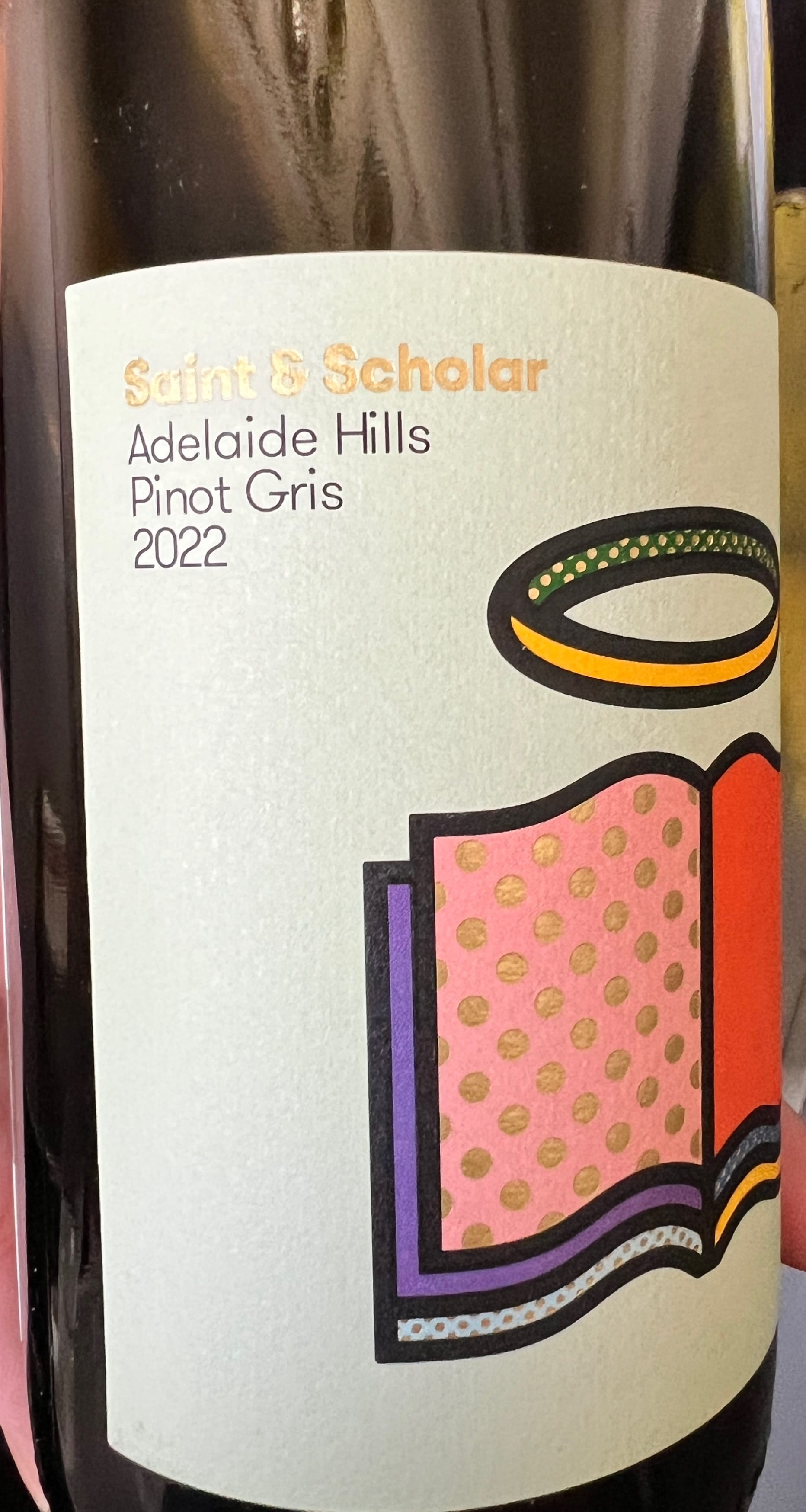
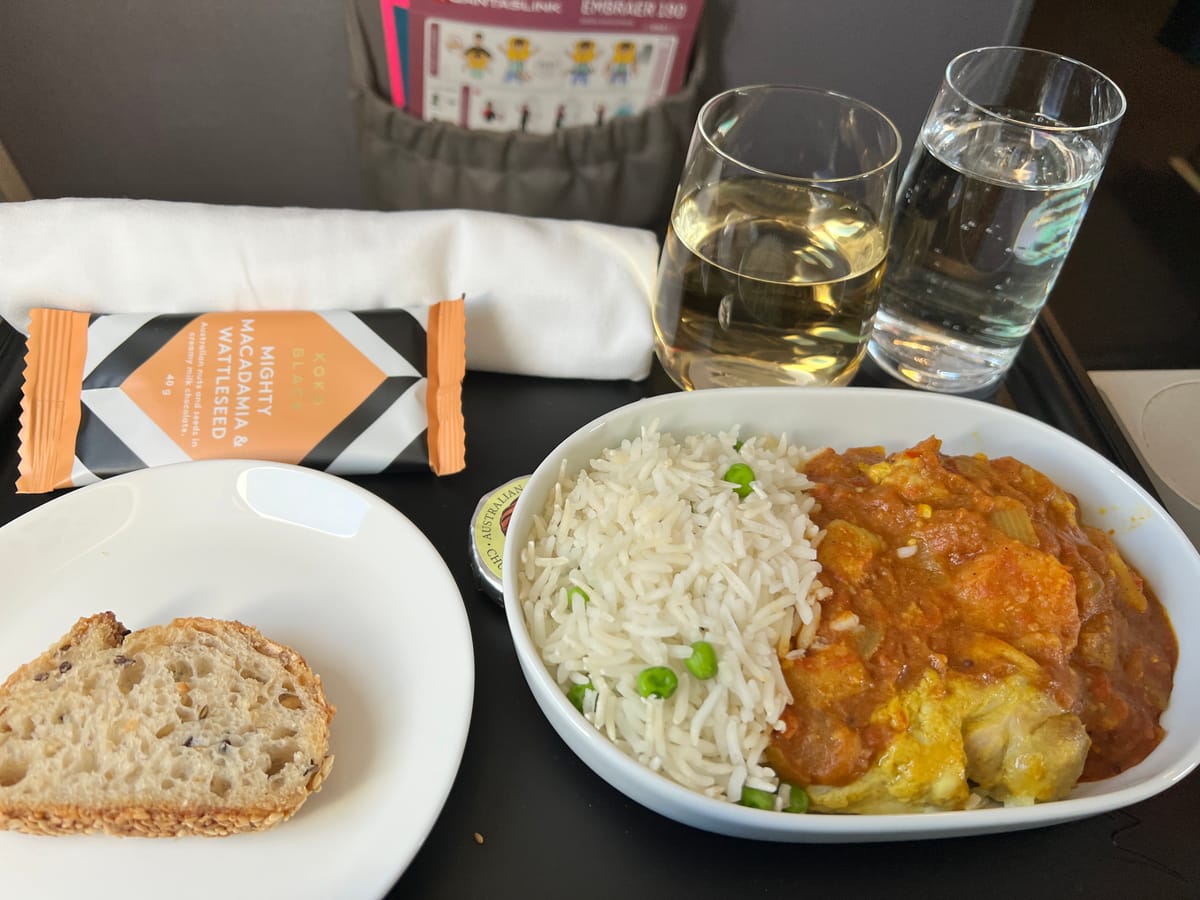
I recently flew from Canberra to Adelaide, and the meal offering is at the top of this page. It was a decent chicken curry. I took a glass, or three, of the white wine on offer, being the really quite excellent Saint and Scholar 2022 Pinot Gris. This wine went quite nicely with the curry, and kept going down quite nicely for the rest of the flight. Just before the descent started, the lovely flight attendant poured the remainder of my glass, and most of the second bottle into a takeaway coffee cup so I could keep enjoying it until we landed.
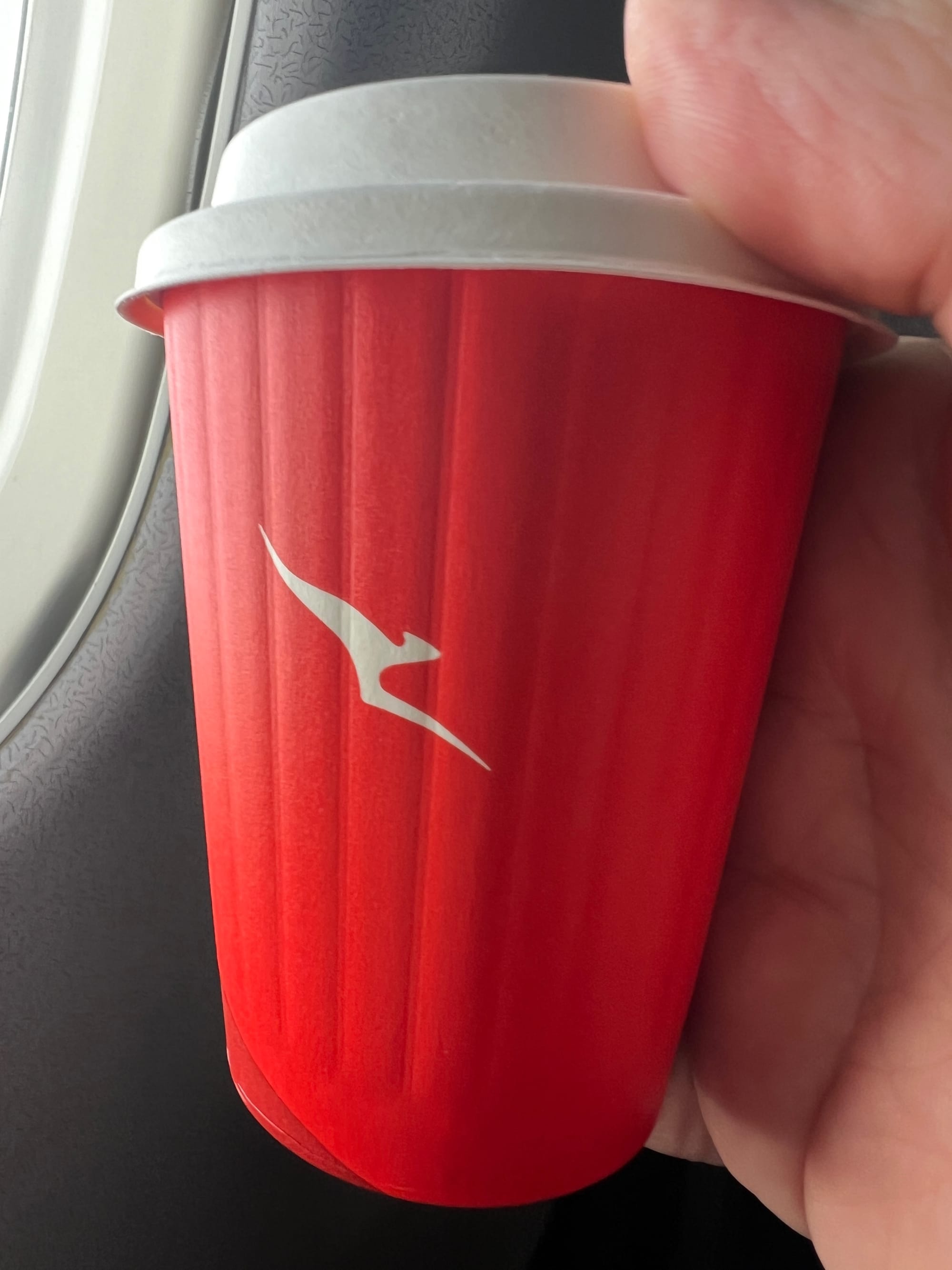
This led me to thinking about how would I go about wine matching with airline food. Take away coffee mugs aside, flying domestically isn't generally known as a luxurious experience. This limits the available food and wine options. And the age old question of "Do tastebuds change with altitude?" I recall a Heston Blumenthal show where he was trying to gourmetise (if such an assault on the English language is allowed) food on an international BA flight. In his culinary science type approach, he decided that the key element to making food taste better in a pressurised environment was umami. I think the show was filmed in around 2011, which coincided with the umami wave overtaking western food. (When I was a kid, we just chucked MSG at everything...)
Anyway, a note on Pinot Gris. Pinot Gris, Pinot Grigio and Grauburgunder are all the same grape. My understanding is that this is a mutant clone of Pinot Noir, hence the close association with Burgundy, with the grapes being "off colour". (Gris, Grigio and Grau are French, Italian and German for "grey"). In Australia, winemakers make both Pinot Gris and Pinot Grigio styles from the same grape - with the Gris generally being more crisp, and the Grigio a little heavier. (that's an enormous generalisation, but stands up to more than a few examples).
My take on it, and this is bringing me back to Heston and curry - is that this grape has a tendency toward producing umami flavours - and Qantas (or their agents) did a great job in choosing this wine to go on flights out of Canberra last week.
Producer: Saint and Scholar
Region: Adelaide Hills
Variety: Pinot Gris
Vintage: 2022.
Price: $22 from most major retailers.